
Last updated November 22, 2026
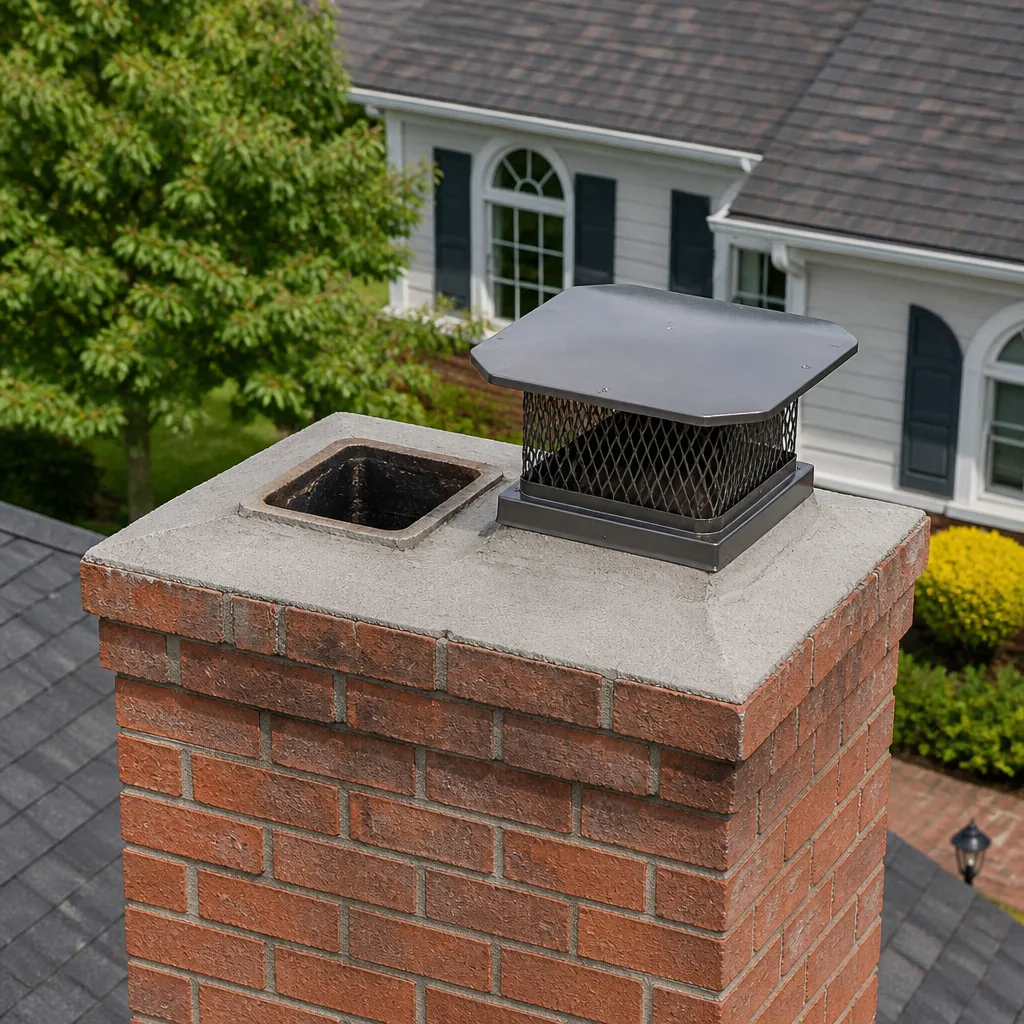 Sweep & inspection
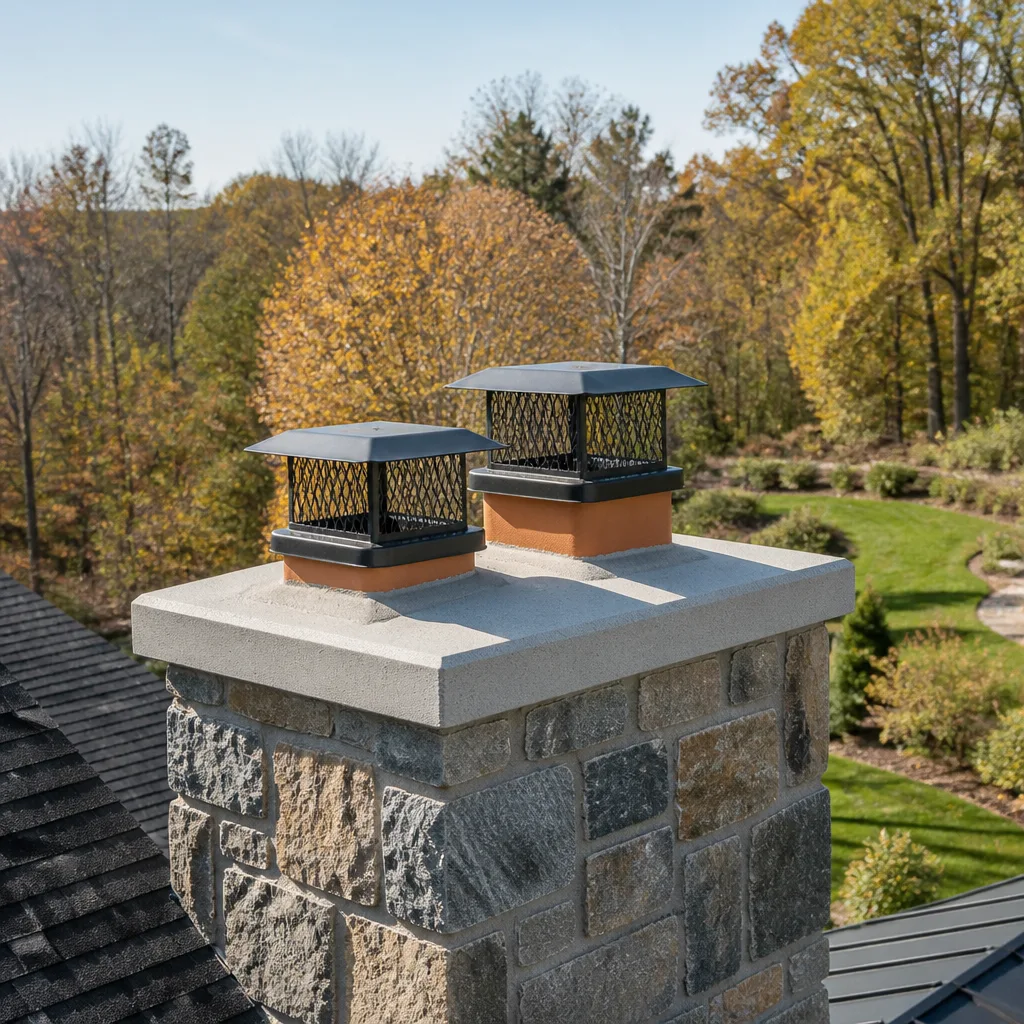 Caps & crowns
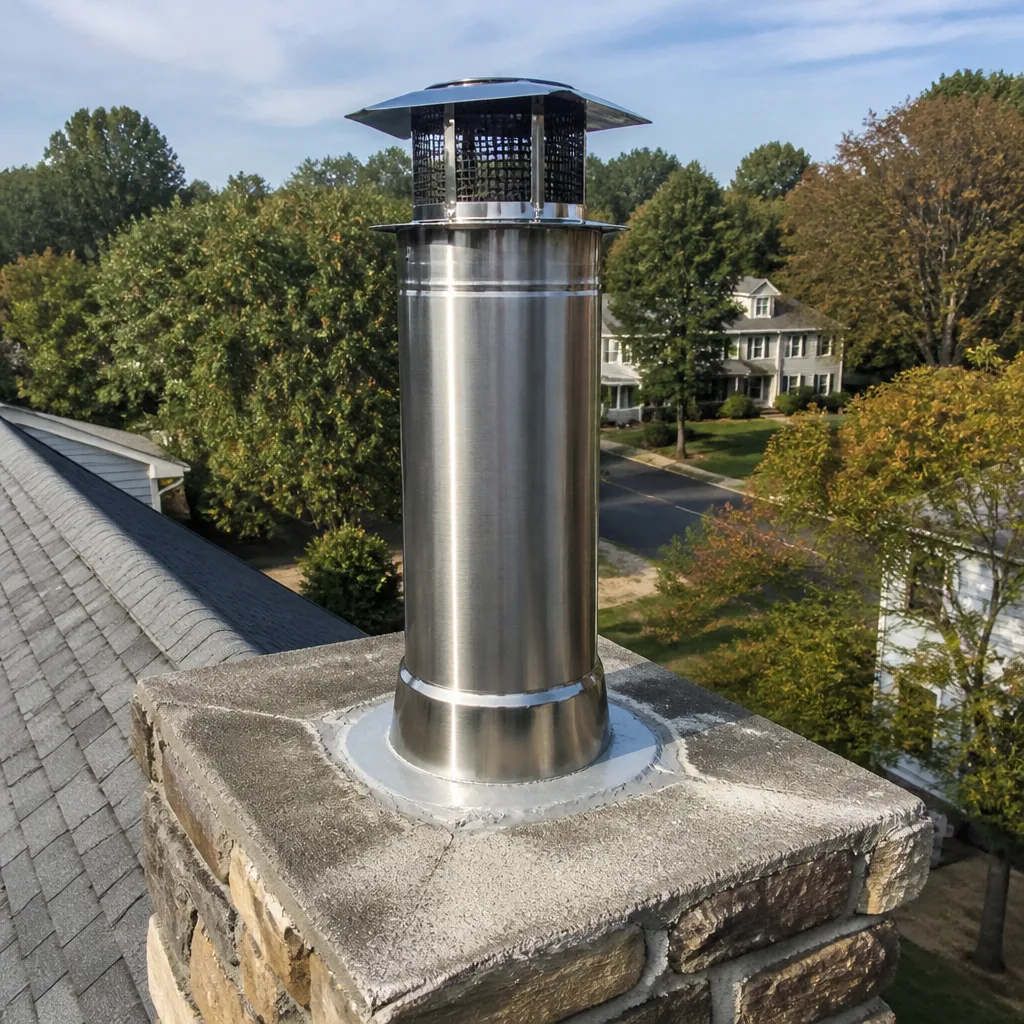 Flue relining
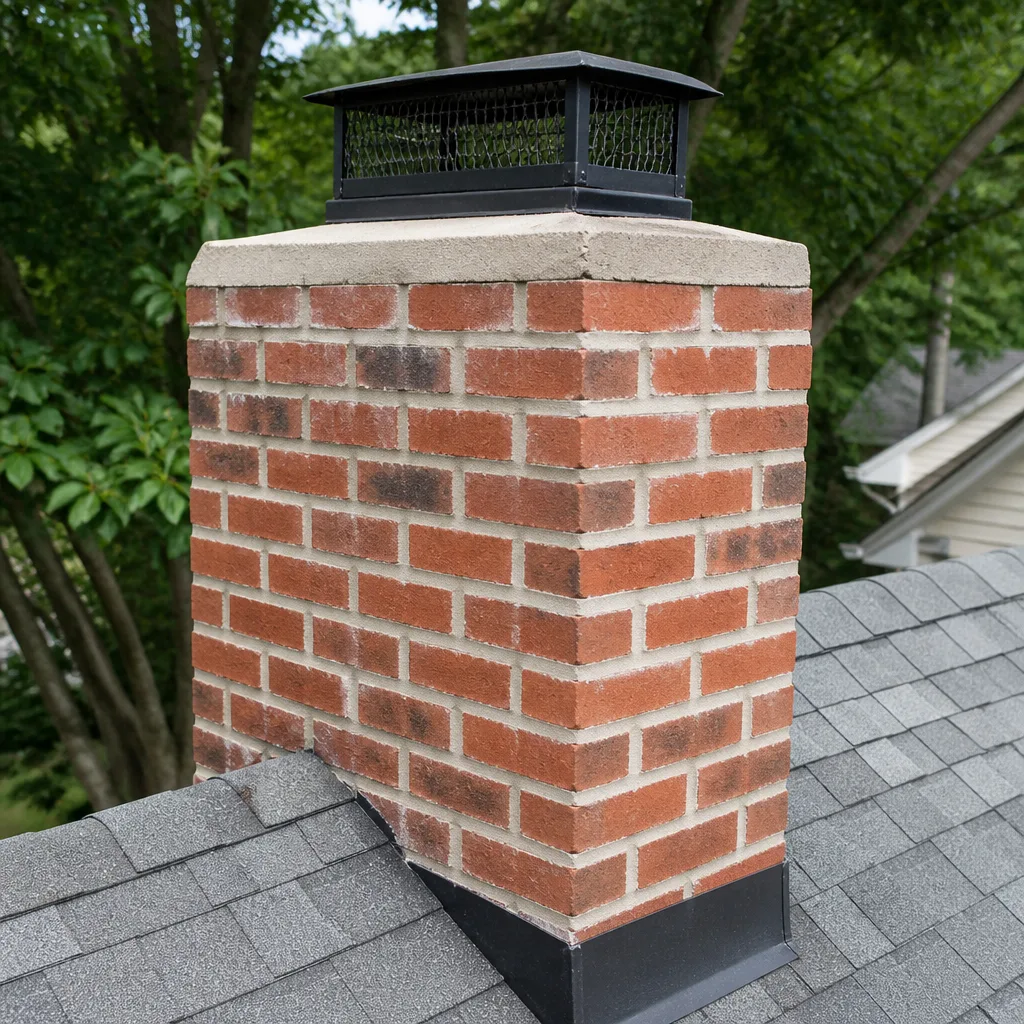 Masonry repair
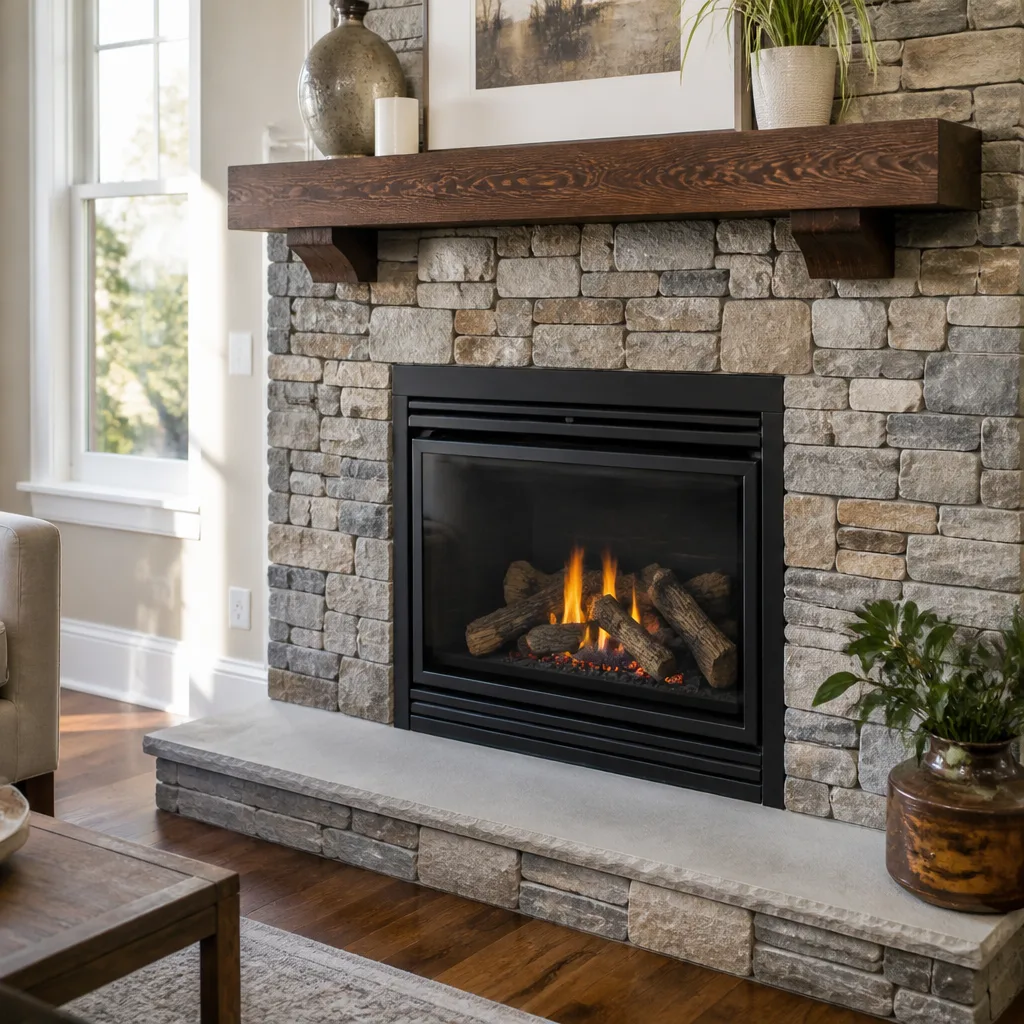 Gas fireplace service
Level 1 sweep and inspection to the NFPA 211 annual standard - flue, crown, cap, and flashing checked and photographed
Chimney sweep logs do not sweep chimneys. They loosen some creosote - which then falls where a brush and vacuum still have to collect it.
DIY vs Professional Chimney Cleaning: The Bustleton Homeowner’s Decision Guide
Most homeowners who ask about cleaning their own chimney assume the question is about ability. It isn’t. A homeowner with a brush kit and a drop cloth can absolutely knock loose, dry soot off a flue. The real question is what a brush and a flashlight cannot tell you. Stage 2 creosote has the texture of tar and bonds to liner surfaces in a way that a consumer brush damages rather than removes, often pushing the deposit into liner seams where it hardens. And no consumer tool lets you see a hairline crack in a clay tile from the firebox looking down. This guide draws the actual line between what DIY handles adequately and where professional equipment stops being optional, with Bustleton conditions in mind throughout.
Quick Answer
DIY chimney cleaning works for light, dry soot in a chimney that’s already known to be sound, and it never works for tar-like creosote or for inspecting the liner. If you can’t confirm the liner’s condition with a camera, the cleaning itself isn’t the risk – the unknown condition is. Bustleton’s cold winters and long heating seasons mean most wood-burning homes here build creosote faster than homeowners expect, which pushes the decision toward professional more often than not.
Styles & brands we work with
- Sweep & inspection
- Caps & crowns
- Flue relining
- Masonry repair
- Gas fireplace service
Table of Contents
- Where DIY Cleaning Actually Stops Working
- What Creosote Stages Look Like and Why It Matters
- Consumer Brush Kits vs Professional Rotary Systems
- Air Quality: HEPA Vacuums and Airborne Particulate
- Why Liner Inspection Can’t Be DIY
- When DIY Is a Reasonable Option
- The Real Cost Tradeoff
- A Step-by-Step Way to Decide
Where DIY Cleaning Actually Stops Working
The scope boundary is easier to see once you stop thinking of “chimney cleaning” as one task. It’s really three separate jobs bundled together: removing deposits, assessing the system, and correcting what the assessment finds. DIY covers the first one partially. It covers the second and third barely or not at all. That gap is the whole decision in a sentence.
Here’s what a homeowner with a standard brush kit can realistically do. If the chimney has seen light use with dry, well-seasoned wood, the deposits inside the flue are mostly loose soot and ash. A brush on a flexible rod pulled through the flue scrapes that material off the liner walls. It falls into the firebox. You vacuum it up. The flue is cleaner afterward. That’s a real, useful result.
What changes the picture is what happens next in the season. Every fire adds deposit. Wood that’s even slightly damp burns cooler and produces more of the sticky, flammable material that a brush can’t cut. In Bustleton, where the heating season runs long and a lot of homeowners store firewood against the house or under a tarp, moisture content is a common problem. Soot builds, then glazes.
The professional side of the boundary isn’t just a bigger brush. It’s a camera down the flue, a HEPA-filtered vacuum keeping the room’s air clean, and a technician who knows what a failing smoke chamber looks like. We handle the full system – not just the sweep – because the sweep is the part that tells us whether the rest of it needs attention. Our technicians have up to 9 years of experience reading those signals.
What Creosote Stages Look Like and Why It Matters
Creosote comes in three recognizable stages, and only the first one is a fair fight for a consumer brush. Knowing the difference is the single most useful thing a homeowner can learn before deciding to clean the chimney themselves.
- Stage 1 – soot and flaky creosote. Dry, dusty, brushes off easily. This is what accumulates during occasional, hot fires with good wood. A consumer brush handles this fine.
- Stage 2 – glazed creosote. Dark, shiny, tar-like, bonds tightly to the liner surface. Brushing it can crack and smear it deeper into seams and pores rather than remove it. This is where consumer tools fail.
- Stage 3 – hardened glaze. Nearly the texture of rock, layered thick. No brush removes this. It needs chemical treatment, rotary equipment, or liner replacement depending on how much damage is underneath.
A common and expensive misconception is that because the firebox looks clean when you shine a light up, the flue is clean. Glazed creosote can coat the upper sections of a clay tile liner while the lower portion reads as normal. From the firebox, you’re seeing maybe two feet of tile. The rest is invisible.
In our experience around Bustleton, a great many chambers that look “due for a clean” turn out to have sections of Stage 2 that a homeowner would have brushed right over. The deposit doesn’t disappear. It gets compacted and redistributed. The result is a chimney that looks better from the bottom and is partly clogged where it matters. That’s why we lead with an inspection before the brush, not after.
Consumer Brush Kits vs Professional Rotary Systems
Consumer kits and professional rotary systems are different categories of tool, not smaller and larger versions of the same thing. Understanding the performance difference makes the decision easier for the homeowner who wants to know what they’re actually buying when they buy a kit.
Two consumer kits dominate the shelves. Rutland makes classic wire and poly brushes with rod kits. Gardus SootEater is a flexible whip on a drill that spins inside the flue. Both do a decent job on loose soot. The SootEater in particular is clever – it reaches around a bend and can handle a straight flue well. But both are built to scrape, not to diagnose or to cut glaze.
Professional rotary systems work differently. They use a powered head with interchangeable chain or poly whips, run at controlled speed, and are paired with a HEPA vacuum at the firebox. The result is not just cleaner liner walls; it’s a controlled removal process that doesn’t scatter dust into the room or jam deposits into seams. The technician watches the head’s behavior and knows when the resistance changes from “loose soot” to “glazed”.
There’s a third consideration most DIY buyers don’t price in: liner material. A wire brush on a stainless flexible liner is fine. On clay tile that’s already spalling? The brush can lift a piece of tile that was already about to fail. Our technician team has seen that exact outcome plenty of times in the Bustleton area. The right equipment depends on what’s inside the flue, and that’s a fact you learn by looking, not by buying.
Air Quality: HEPA Vacuums and Airborne Particulate
When you clean a chimney without a HEPA-filtered vacuum, fine soot and creosote particulate become airborne in the room. You won’t see most of it. You’ll feel it in your throat, and you’ll find a fine gray dust settled on the mantel, the furniture, and the trim a day later. That’s the visible portion. The invisible portion is the part worth thinking about.
Professional cleaning pairs the brush with a vacuum built for the job. The HEPA filter captures fine particulate at the firebox opening where the dust originates, before it enters the room’s air. A shop vac with a standard filter is not a substitute – it captures the big pieces and blows the fine ones straight through. The difference in what you breathe during and after a cleaning is real and measurable in the state of the room.
This is one of the reasons we don’t consider a sweep complete without the vacuum setup. Our technicians have up to 9 years of experience running a brush and vacuum as one operation, and the discipline of keeping the firebox sealed during the sweep is what keeps the living room clean. If you’re going to do the job yourself with a consumer kit, at minimum cover the firebox opening tightly with plastic and tape before you start. It’s a small step that saves a lot of cleanup, but it doesn’t substitute for a proper filtered vacuum.
Why Liner Inspection Can’t Be DIY
The liner is the part of the chimney system you can’t inspect from the firebox, and it’s the part that matters most for safety. A clay tile liner develops cracks from thermal cycling, from moisture, and from chimney fires that were too small to notice. A stainless liner develops fatigue at joints and can separate where sections meet. None of this is visible from the bottom looking up with a flashlight.
Professional inspection uses a camera on a flexible rod, fed down from the top or up from the firebox, and records the run. The technician can see the liner wall for its full length, identify cracks, gaps, spalling, and separation at joints, and compare the recording against the next inspection. It’s the one part of the chimney safety picture that has no DIY equivalent.
Here’s what an unchecked clay tile failure looks like in practice. A hairline crack in a tile lets hot gas and creosote vapor pass behind the liner and reach the surrounding masonry. Over seasons, that path widens. A chimney that appears fine from the firebox can be leaking combustion products into wall cavities with no visible sign inside the home. That’s the scenario that turns a routine cleaning into a repair. We’re certified to apply HeatShield chimney resurfacing, which restores damaged liners without full replacement in the cases where it’s the right method – and we’ll say so plainly when it isn’t.
If you’re going to invest the effort of a DIY cleaning in Bustleton, spend an extra step on the inspection side. Have the liner camera-inspected once a year, even if you sweep the soot yourself the rest of the season. It’s the part of the job that pays for itself in what it catches early. You can read more about what we check on the chimney repair side of the work.
When DIY Is a Reasonable Option
DIY cleaning is a reasonable option in specific, limited circumstances. Rather than a list of “if you’re handy”, the honest answer is a scenario with three conditions that all need to be true at the same time. If any one is missing, the tradeoff tips toward a professional sweep.
- A gas fireplace with light use. Gas burns clean, so deposits are minimal. There’s no creosote accumulation in the way a wood-burning fireplace produces it, and the flue typically needs much less intervention.
- A stainless liner less than five years old. A professional-grade flexible liner installed recently and used correctly is unlikely to have developed the kind of degradation that a camera would catch. The shorter the installation’s track record, the safer the assumption.
- A cap that’s known to be intact. A missing or damaged cap lets water and animals into the flue. If the cap is intact, the interior is protected from the two most common causes of liner degradation between cleanings.
When all three conditions hold, cleaning light soot off a stainless liner yourself is a fair call. Use a poly brush on stainless, not wire. Cover the firebox. Work slowly. And still plan on a professional camera inspection at a reasonable interval, because “no visible reason to worry” isn’t the same as “confirmed fine”.
Where DIY isn’t a reasonable option – even for a confident homeowner – is a wood-burning fireplace in regular use, an older clay tile liner, any chimney with a history of a chimney fire, or any flue where the last cleaning was more than a season ago. In those cases the deposit type alone usually decides it. If you want a professional pair of eyes on the chimney sweep, we can schedule one without any commitment to further work.
The Real Cost Tradeoff
The cost tradeoff isn’t “save a service call vs spend a service call.” It’s “save a modest amount now vs carry the risk that something the cleaning would have caught goes another season.” Framed as arithmetic, here’s how the two paths compare.
- DIY cost: a consumer kit, drop cloths, and your own time. Modest.
- Professional cleaning cost: a written estimate per job. Also modest, and it includes camera inspection and a report you can look at.
- DIY risk exposure: any condition the brush wouldn’t reveal – a cracked tile, a separated liner joint, a smoke chamber that’s degrading – continues to develop through the heating season.
- Professional risk exposure: reduced, because the inspection either clears the system or identifies the issue before it becomes a repair.
The risk on the DIY side isn’t that a homeowner causes a chimney fire by cleaning. It’s that they spend several seasons confident the chimney is clean because they swept it, when in fact an undetected liner problem has been growing. A failed liner creates a path for smoke and carbon monoxide into the home and a path for heat to reach framing. Those are the two outcomes that matter, and they’re the two outcomes a camera catches that a brush doesn’t.
There’s also an equipment cost that most DIY budgets miss. A proper HEPA filter, the right brush for the liner material, camera equipment, and the time to do it well add up. When you price the full kit against a single professional cleaning, the gap is narrower than it looks, and the professional side includes a written report. Estimates are free, and the written estimate sets the final price whatever the sweep finds. If you’d like a number for your specific chimney, that’s the place to start.
A Step-by-Step Way to Decide
Rather than guess, work through a short set of questions in order. Each answer narrows the decision. When a question lands on “unknown”, that’s the point where the professional path is the safer one.
- What’s the fuel? Gas fireplace with light use leans DIY. Wood-burning leans professional.
- What’s the liner material and how old is it? Stainless, recently installed, leans DIY. Clay tile of uncertain age leans professional.
- What did the last cleaning reveal? If a professional inspection cleared the system within the last year or two, DIY in between is fine. If nobody’s camera-inspected it in years, start there.
- What’s the creosote stage? If the answer is “I don’t know”, it’s unknown – which means it needs to be inspected before deciding whether a brush can handle it.
- Is the cap intact? A missing or damaged cap is an inspection trigger, not a DIY green light.
- How much of the season will you actually be burning? Heavy use through a Bustleton winter pushes creosote faster than light use. Match your cleaning interval to your use.
The step that most often redirects a Bustleton homeowner toward a professional sweep is step 4. Consumer brushes don’t reveal creosote stage, and without that information there’s no good way to know if the brush you’re using is doing the job cleanly or just smearing glaze deeper. Once the stage is confirmed – either loose or glazed – the rest of the decision tends to make itself.
The chimney cap & crown piece of the system is worth its own look during any inspection. A cracked crown or a loose cap is one of the most common moisture entry points in a chimney, and it’s the kind of thing that’s easy to miss when the whole focus is on the flue brush. Our team checks both every time we’re out, because water damage is one of the top causes of liner failure.
Common Mistakes to Avoid
- Judging the flue by the firebox. A clean firebox and a clean flue are two different things. The most damaging creosote deposits sit in upper sections a flashlight from below can’t reach.
- Assuming “clean” means “safe”. A swept chimney is not the same as an inspected chimney. Without camera confirmation, a swept chimney with a cracked liner is still a chimney with a cracked liner.
- Using a wire brush on clay tile that’s aging. Wire brushes can lift already-loosened tile. In Bustleton’s climate, the freeze-thaw cycle through winter is hard on masonry, and older liners get friable.
- Cleaning without a HEPA-filtered vacuum. Standard shop vacs blow fine soot into the room’s air. Fine soot deposits everywhere and is breathed during and after the cleaning.
- Burning unseasoned wood. Wood stored under a tarp or stacked against the house holds moisture. Damp wood produces more glazed creosote per fire than dry wood.
- Skipping inspection because the cleaning “looked fine”. The cleaning result says nothing about the liner’s condition. The camera does.
- Going years between assessments. Between professional inspections, DIY cleaning can keep deposits down, but it can’t substitute for the periodic walkthrough that catches developing damage.
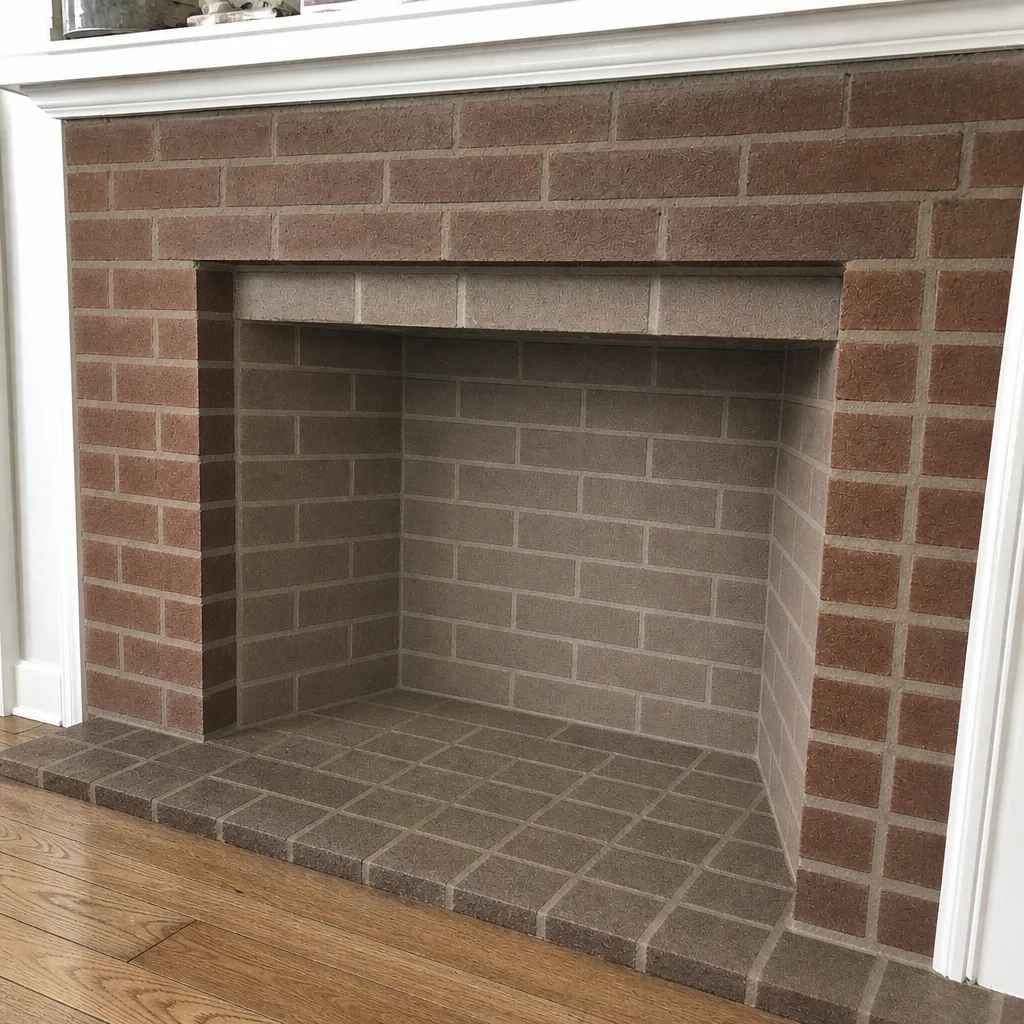
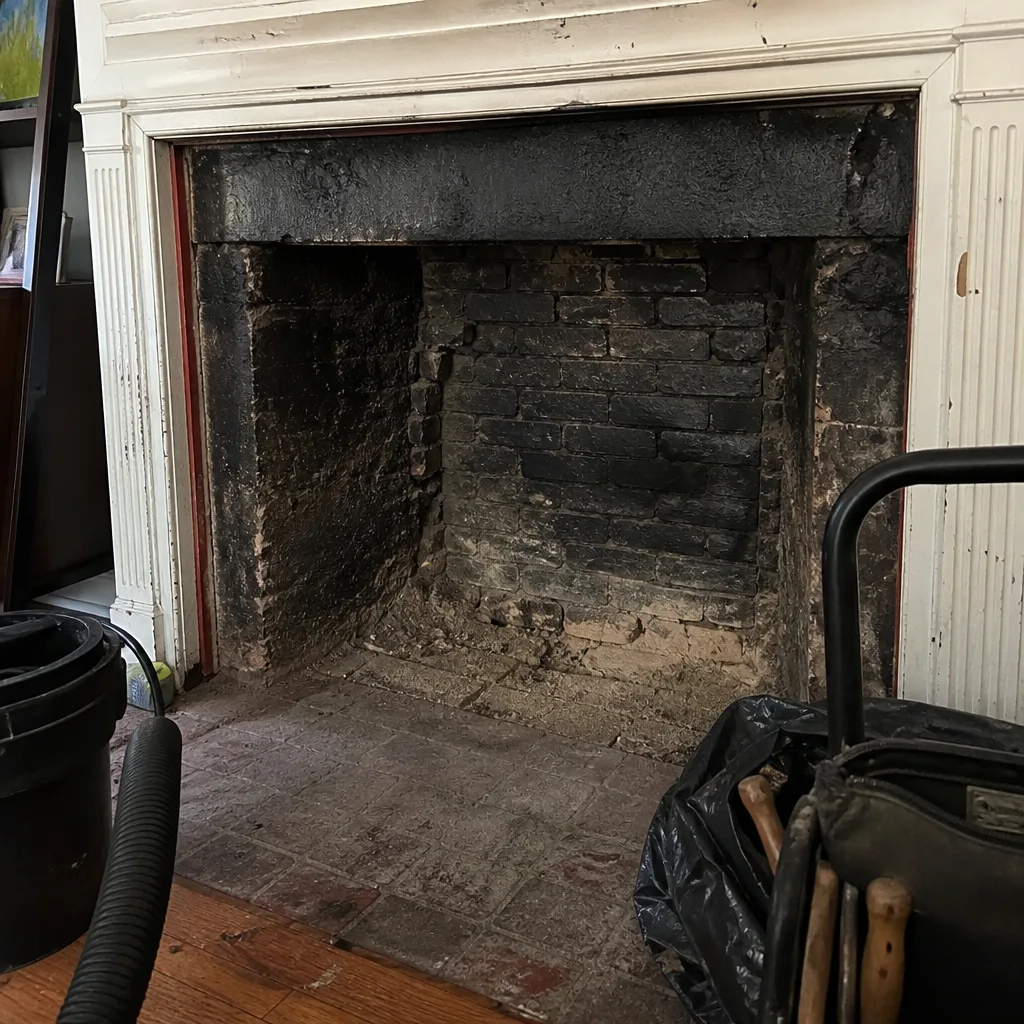
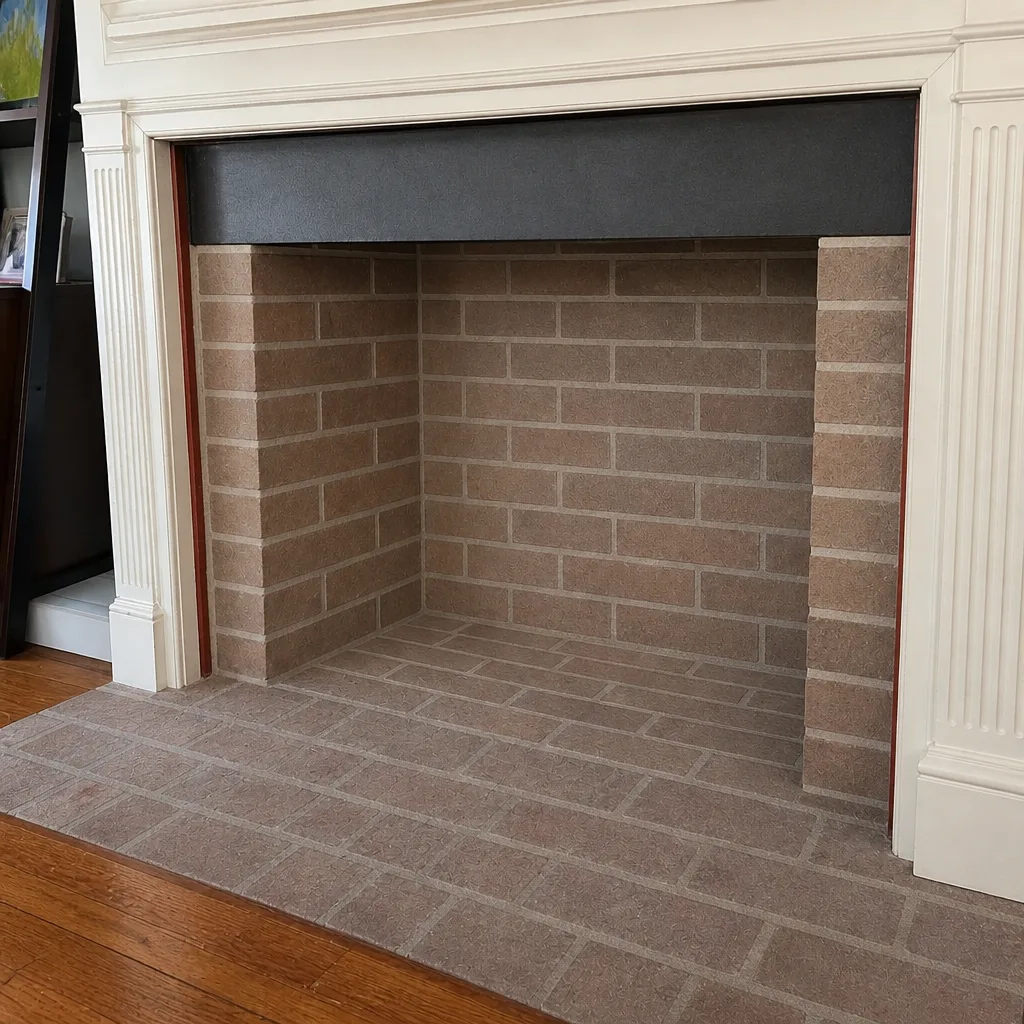
See the difference
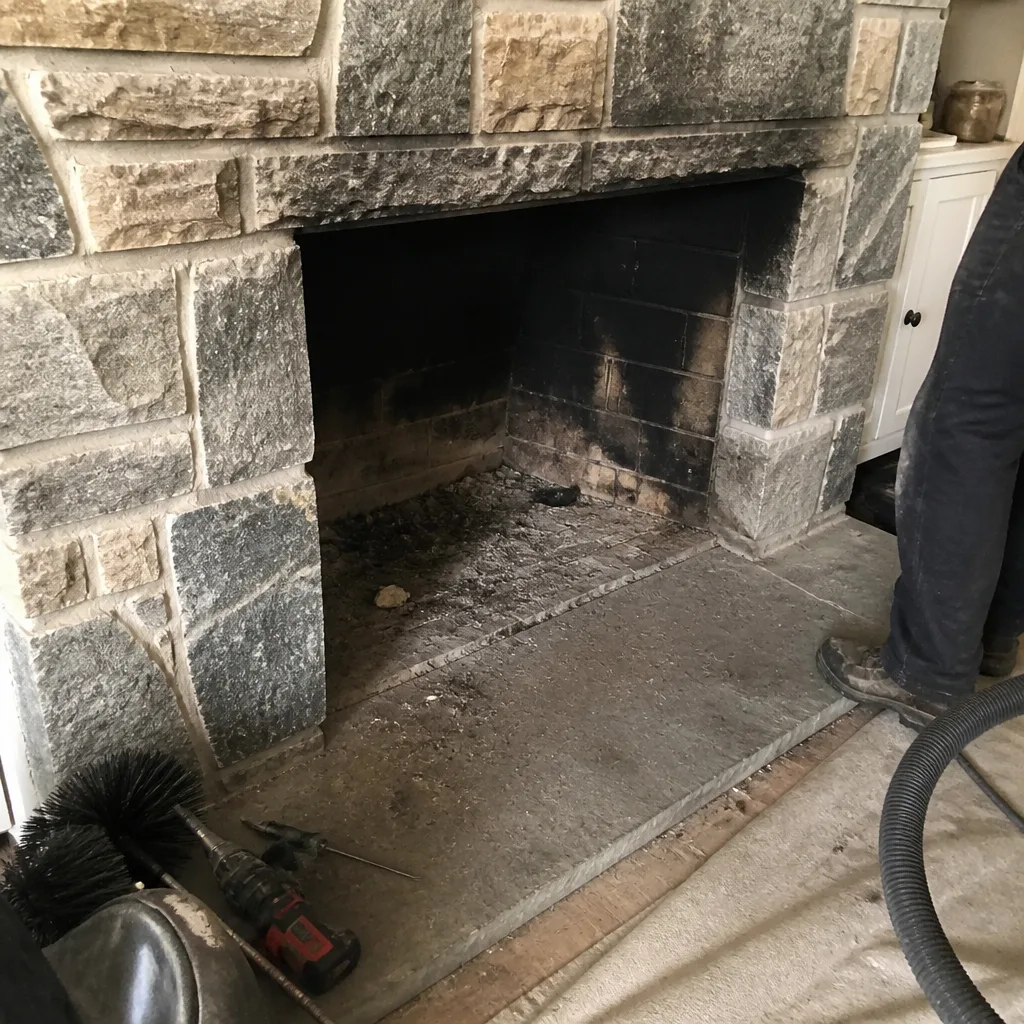 Before
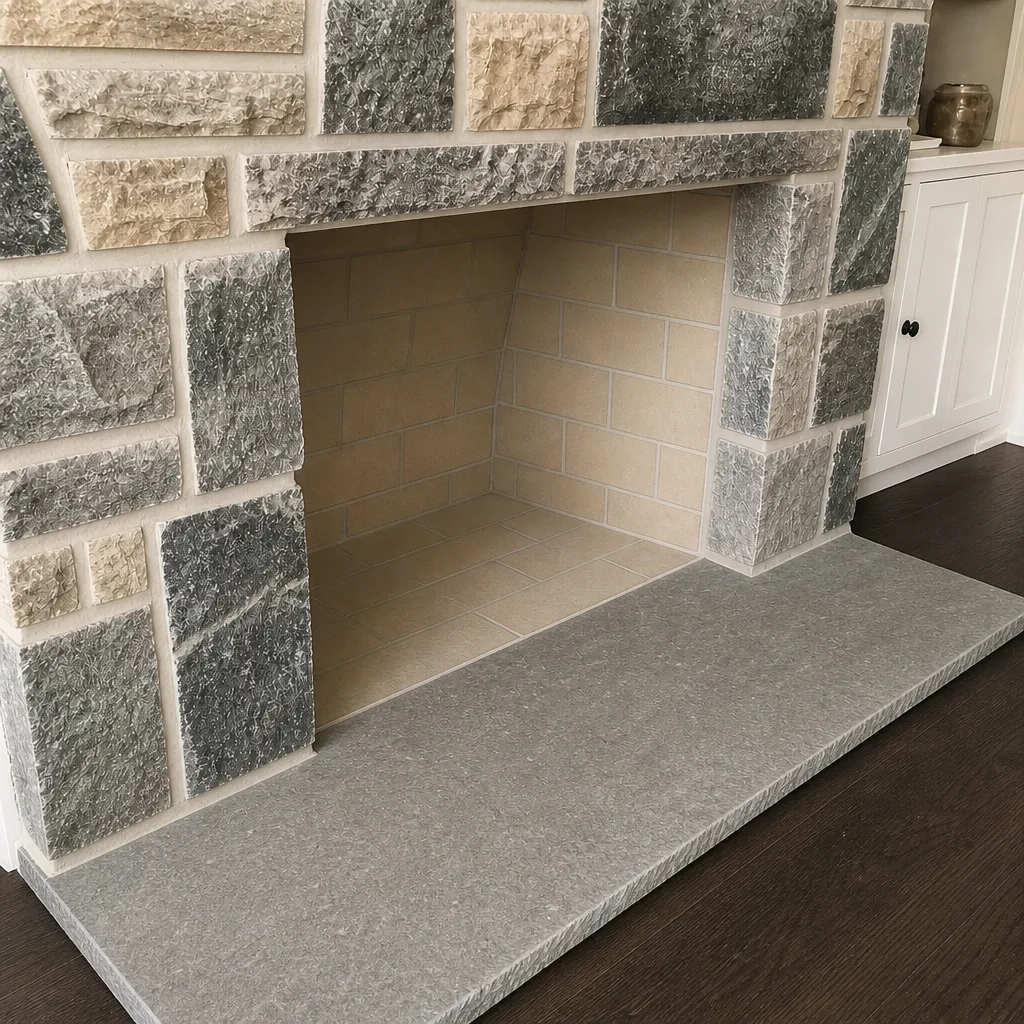 After
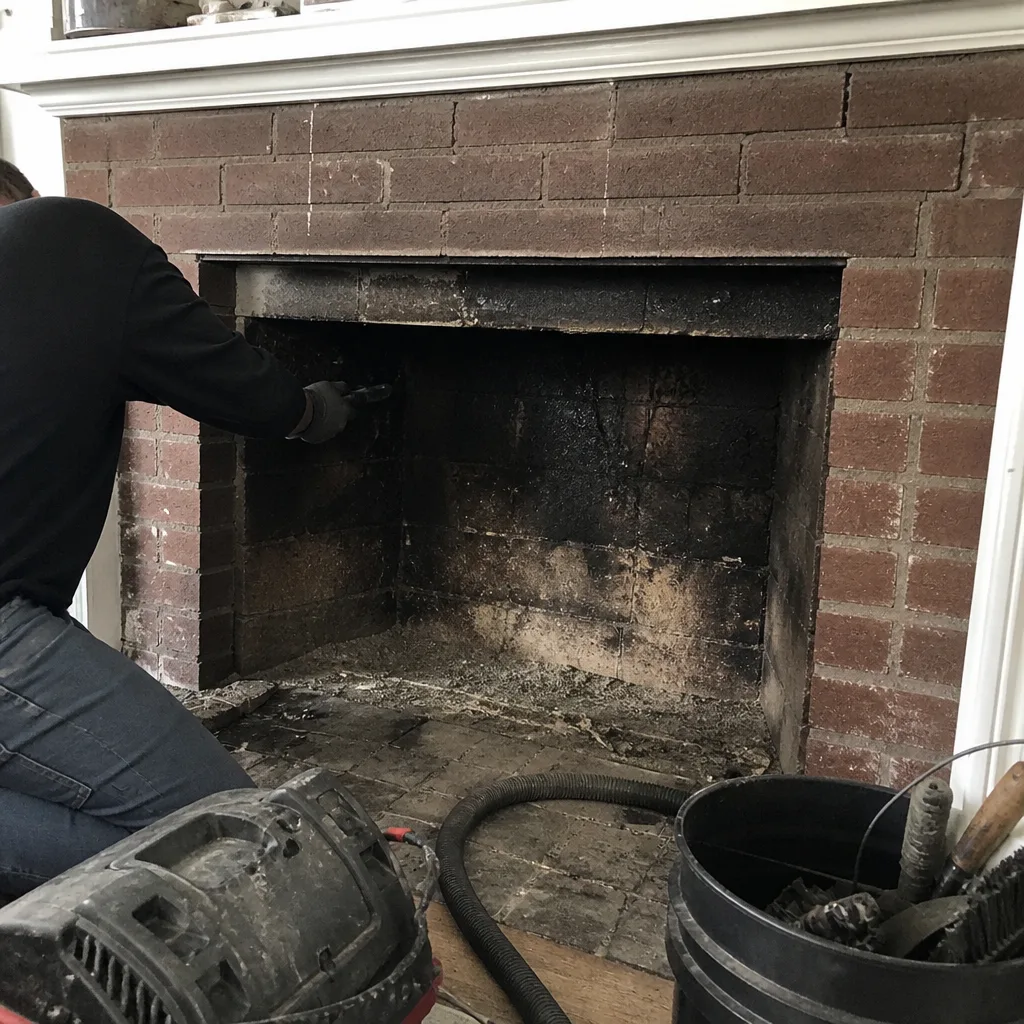 Before
 After
 Before
 After
When to Call a Professional
Call a professional in any of these cases: the fireplace has burned wood heavily for more than a season, the chimney hasn’t been inspected in over a year, there’s been a chimney fire of any size, the cap is damaged or missing, the liner material or age is unknown, or you’re seeing any sign of moisture around the chimney. Each of these makes a camera inspection the sensible first step before any cleaning decision.
Once the inspection is done, the rest of the work – the sweep, the repair, the liner replacement if it comes to that – can be quoted from a written estimate that sets the final price. Our technicians have up to 9 years of experience across the full chimney system, from routine cleaning through DuraFlex liner installation, and we work in professionally recognized materials throughout. Chimney Sweep Bustleton offers free estimates in Bustleton – call (833) 350-7109. We answer 24/7. Fast dispatch from 7am to 7pm, Sunday through Friday.
Frequently Asked Questions
You can clean light, dry soot off a flue with a consumer kit without doing damage. You can make it worse if you brush glazed creosote, because glazed deposits can smear deeper into seams under a consumer brush. The safe way to decide is a camera inspection first, which confirms whether the deposit inside is brushable or not.
You typically can’t, which is the core problem with DIY cleaning. Stage 2 creosote is dark, shiny, and tar-like, and it bonds to the upper flue where a flashlight from the firebox can’t reach. Only a camera on a rod fed through the flue reveals the stage – and the answer changes whether a brush is safe to use.
Once a year for any chimney in active wood-burning use, and once every couple of years for a gas fireplace with light use. Bustleton’s long heating season and freeze-thaw winters make liner damage more likely to develop than in milder climates, so the annual inspection rhythm holds up particularly well here.
On the cleaning line alone, DIY is cheaper. Once you factor in the equipment cost of a proper HEPA-filtered setup, the camera inspection you still need, and the risk of missing a condition the brush can’t reveal, the gap narrows. Our estimates are free and the written estimate sets the final price, so you can compare the two paths with real numbers.
Hot gas and creosote vapor can pass behind the liner and reach the surrounding masonry, widening the crack over seasons. In the near term there may be no visible sign inside the home. Over time, the pathway can allow smoke or carbon monoxide to enter the living space, which is why the camera inspection matters more than the cleaning result.
Yes, but the professional visit becomes an inspection more than a cleaning. If you handle the light soot yourself between seasons, the annual visit becomes a camera inspection with a photo report – which is the part DIY can’t replicate. You can see our full scope at Chimney Sweep Bustleton.
The Bottom Line
DIY chimney cleaning is a fair option for light soot in a system that’s already confirmed sound, especially in a gas fireplace with a young stainless liner and an intact cap. It’s the wrong option wherever the flue’s condition is unknown, wherever wood is being burned heavily, and wherever creosote could be glazed. The cleaning itself is the easy part. The camera inspection is the part that keeps the chimney safe. In Bustleton, that inspection is worth doing once a year regardless of who handles the brush, and it’s the reason we lead with the camera before we ever pick one up.
Written by the team at Chimney Sweep Bustleton.