
Last updated November 22, 2026
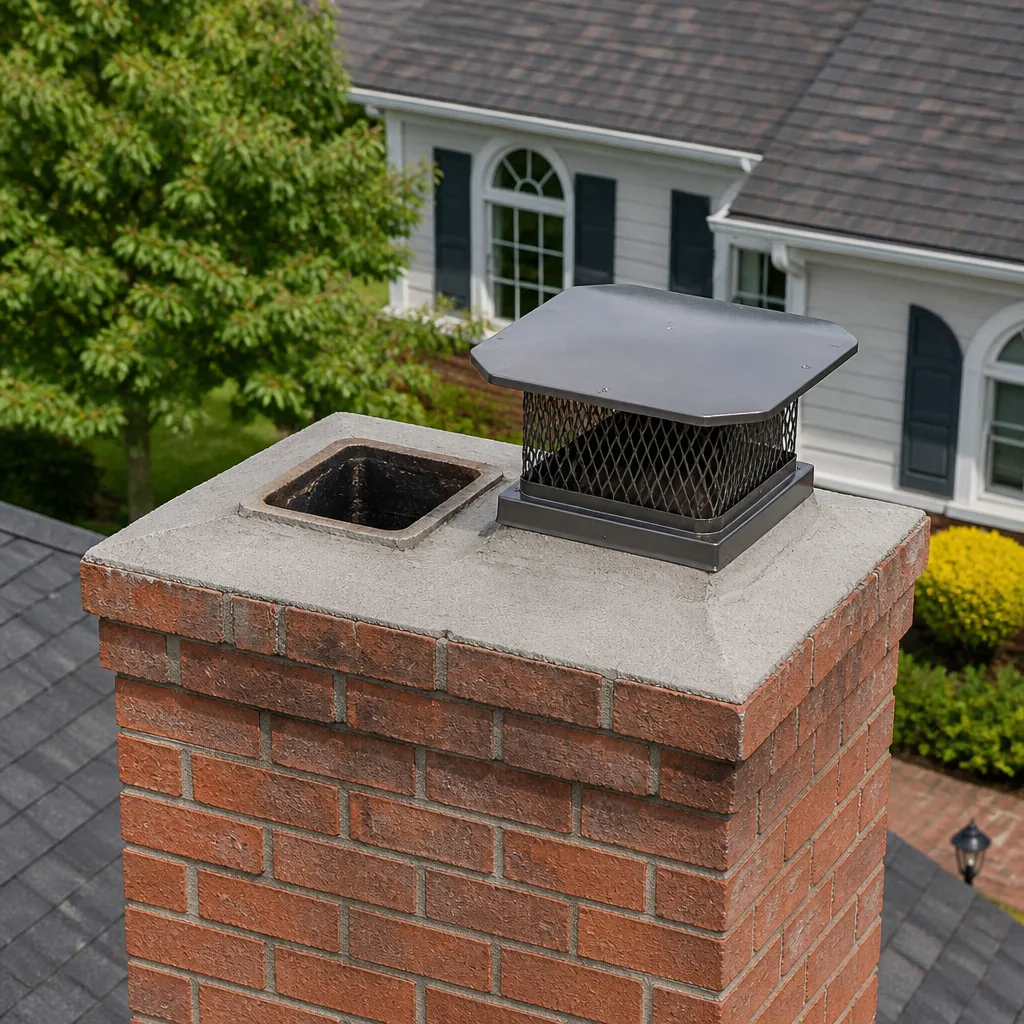 Sweep & inspection
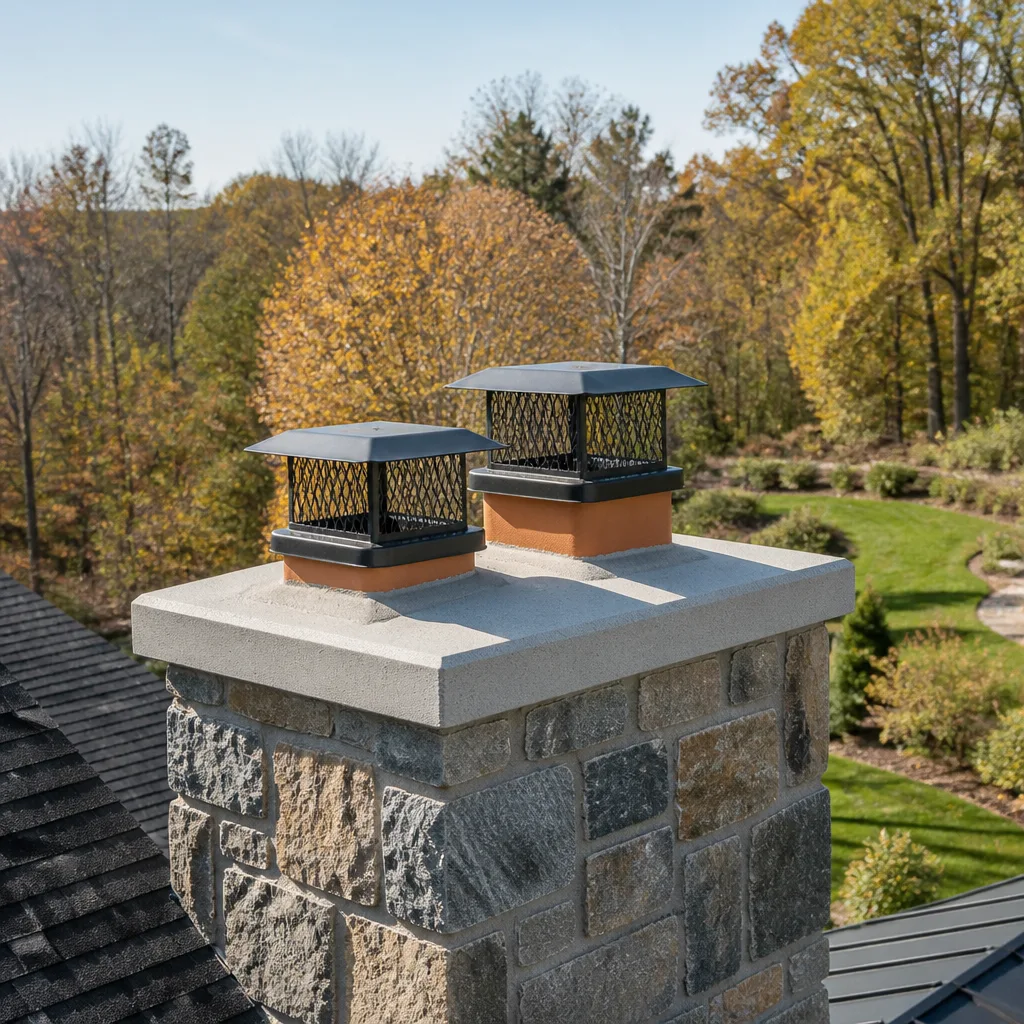 Caps & crowns
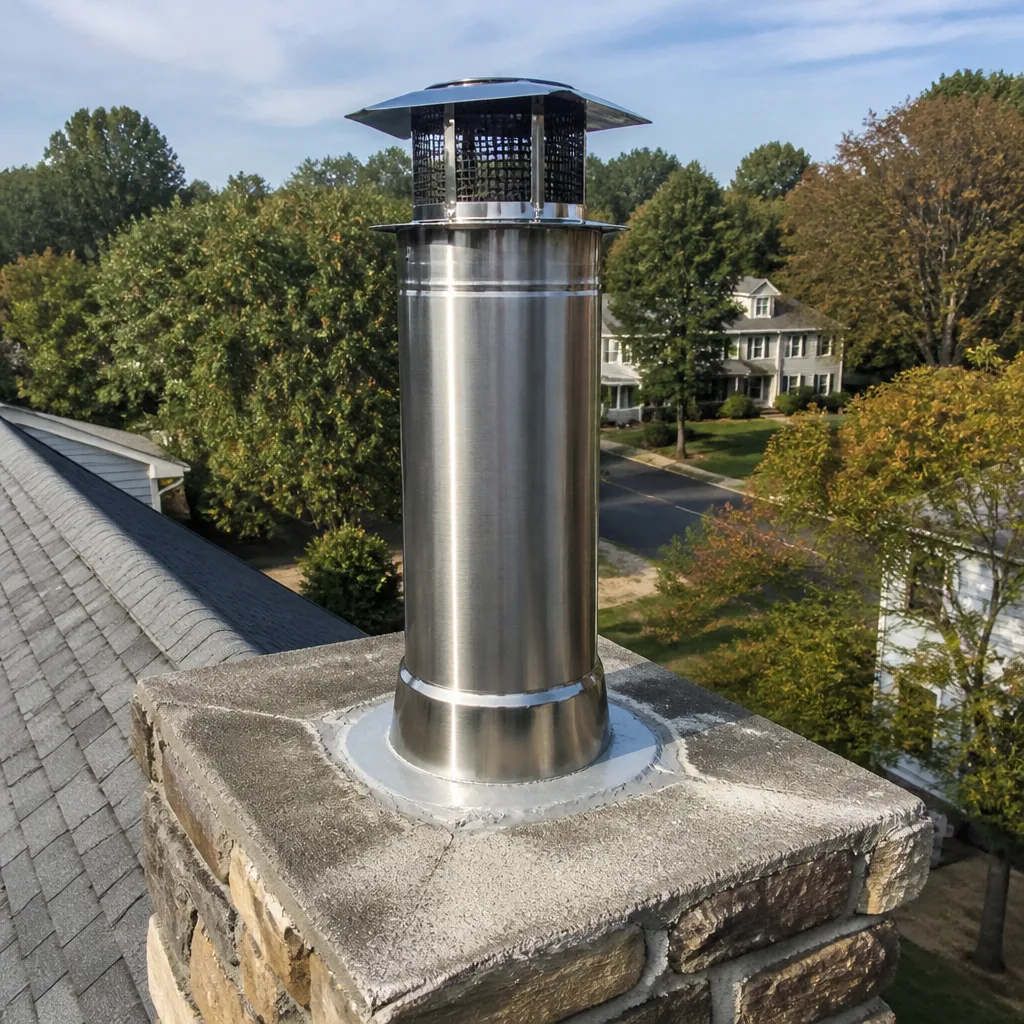 Flue relining
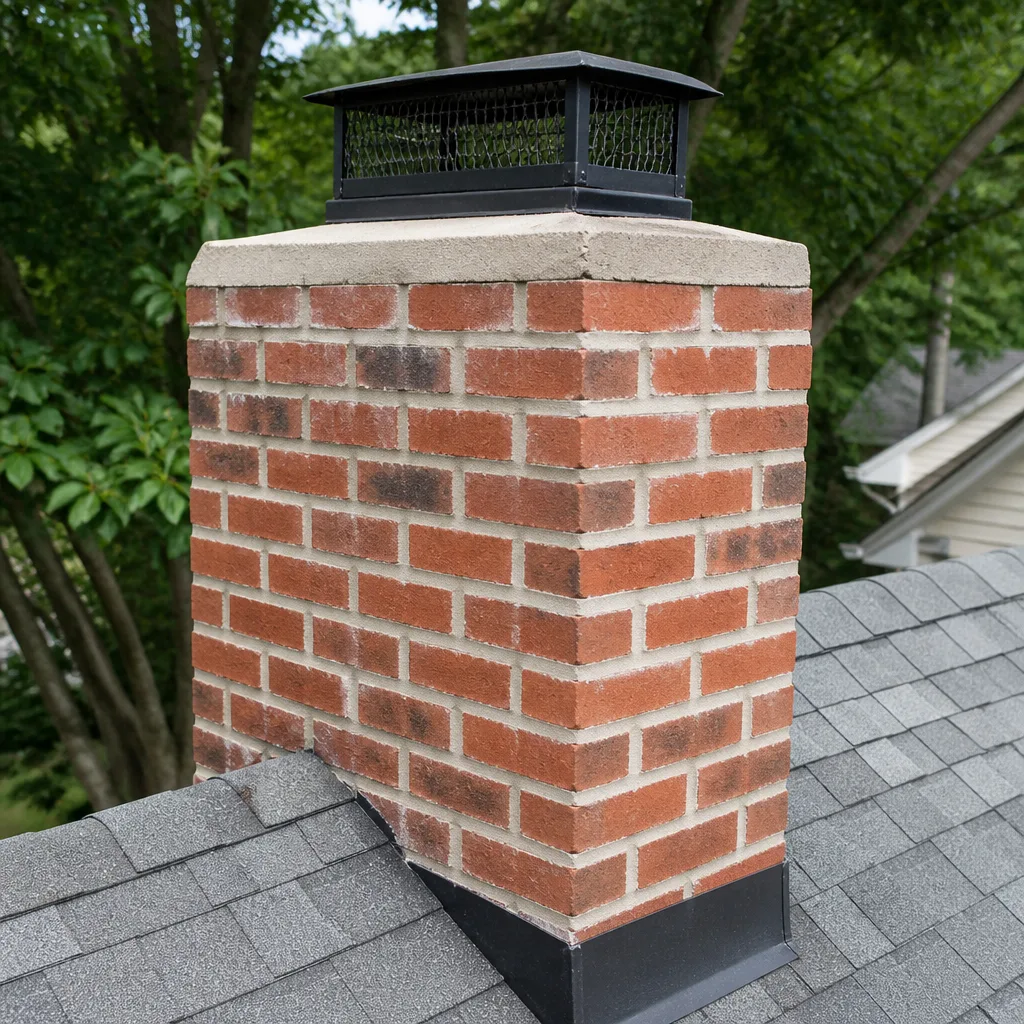 Masonry repair
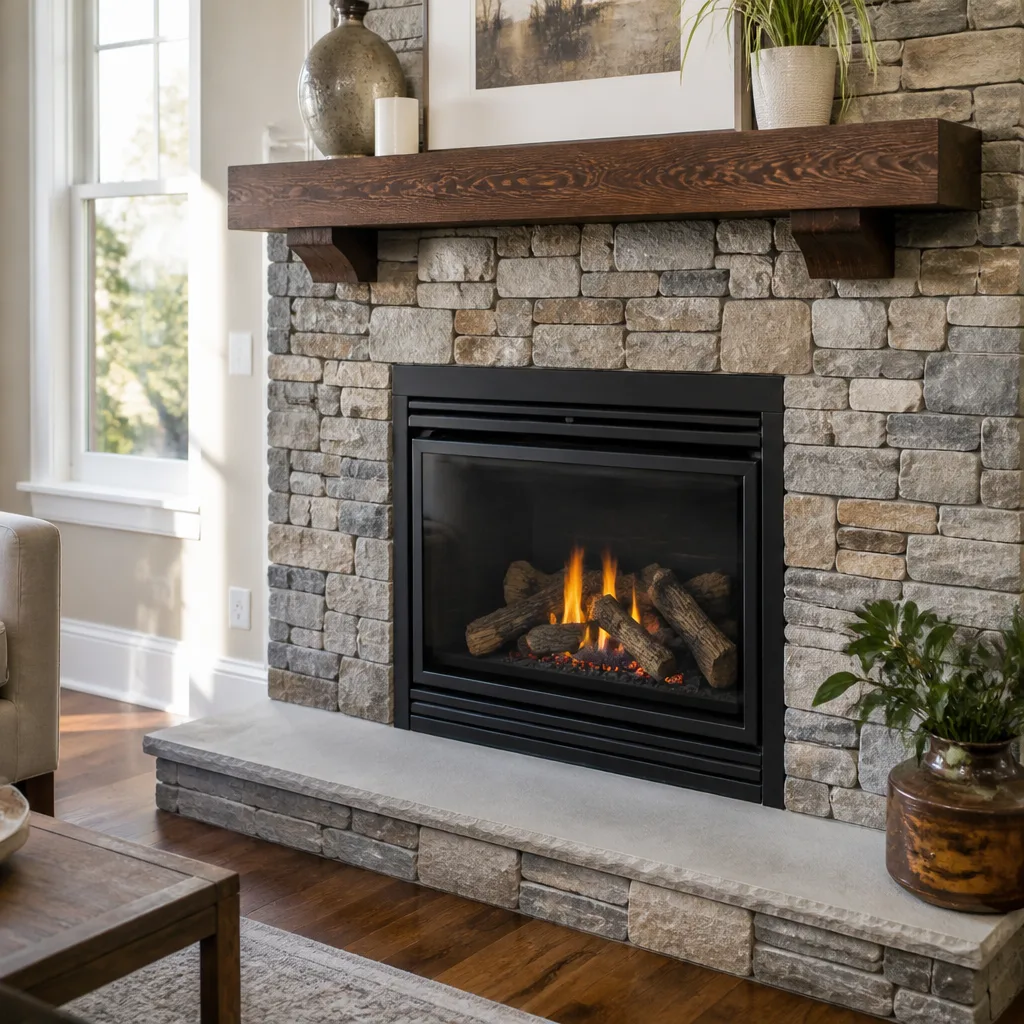 Gas fireplace service
Level 1 sweep and inspection to the NFPA 211 annual standard - flue, crown, cap, and flashing checked and photographed
Chimney sweep logs do not sweep chimneys. They loosen some creosote - which then falls where a brush and vacuum still have to collect it.
Chimney Sweep Maintenance Checklist for Bustleton Homeowners
Most chimney maintenance advice tells you to sweep once a year and call it done. That’s a cleaning schedule, not a maintenance system. The parts of a chimney that fail first are rarely the flue interior on a well-used fireplace; they’re the crown, the cap, the mortar joints and the smoke chamber, and those degrade quietly between visits. A Bustleton chimney goes through freeze-thaw cycles every late winter that open hairline cracks into real ones, and no annual brush addresses that. This checklist gives you the same visual reference points a technician uses: what to check, when to check it, what a healthy component looks like and what it looks like when it’s starting to go. Read it once and you’ll know your chimney better than most homeowners ever do.
Quick Answer
A chimney maintenance checklist for a Bustleton home covers three rhythms: monthly ground-level checks of the cap and crown from binoculars, seasonal checks tied to freeze-thaw cycles and the start of heating season, and an annual professional sweep with a camera inspection of the flue. Log what each professional visit finds (liner material, cleaning date, creosote stage, deferred repairs) so you can track wear between visits. Water intrusion at the crown and cap is the most common cause of gradual chimney damage, and it’s the easiest thing to catch from the ground if you know what you’re looking at.
Styles & brands we work with
- Sweep & inspection
- Caps & crowns
- Flue relining
- Masonry repair
- Gas fireplace service
Table of Contents
- Monthly Checks You Can Do From the Ground
- Seasonal Checks Tied to Bustleton Weather
- Reading the Crown and Cap: What a Healthy One Looks Like
- Interior Checks You Can Do Safely
- The Annual Professional Visit and What to Log
- Red-Line Conditions: When to Schedule Service Now
- Building Your Chimney Condition Log
Monthly Checks You Can Do From the Ground
Five minutes with a pair of binoculars from your yard catches most early-stage chimney problems. You’re not diagnosing; you’re watching for change. Pick a fixed viewing spot, ideally from the street side or a corner of the yard where you can see three faces of the chimney, and repeat the check from the same place each month so you’re comparing like to like.
Here’s what to look at, in order:
- The cap. Is it sitting square on the flue, or has it shifted, tilted or come loose? Check the mesh or louvers for rust-through or sagging. Check that birds haven’t nested under it.
- The crown. The concrete slab on top of the chimney. Is it intact across the whole surface, or do you see cracks radiating from the flue opening? Is any piece of it spalling off?
- The mortar joints. Run your eye down the brickwork. Joints should be full and consistent in depth. Recessed joints, dark streaks, or white powdery bloom all deserve attention at the annual visit.
- The flashing. Where the chimney meets the roof, look for lifted edges, gaps, or black staining on the shingles below.
- Staining on the exterior brick. Vertical dark streaks below the crown or below a joint line usually mean water is getting in above that point.
Write down what you see, or photograph it, so you can compare month to month. What looks like nothing this month may be the start of a pattern by the third month, and the pattern is what tells you something is moving. If you spot a loose cap or a piece of crown missing entirely, note it and call it in without waiting.
Seasonal Checks Tied to Bustleton Weather
Bustleton’s climate does specific things to masonry. The freeze-thaw cycles that hit in February and March are the hardest part of the year on a chimney, because water that has soaked into a mortar joint expands when it freezes and pries the joint apart a little more each time. That’s why the biggest incremental wear on a Bustleton chimney happens after the coldest part of winter, not during it. A joint that was tight in October may be visibly open by March. That’s not a reason to panic; it’s a reason to schedule a check at the right time of year.
Here’s how the calendar breaks down for a Bustleton homeowner:
- Early fall (before heating season). Schedule the annual sweep and inspection now, before the first fire. This is the check that establishes creosote stage and flue condition going into the burn season. It’s also the visit that will catch anything that worsened over the summer.
- Late winter (after the freeze-thaw cycles). Do a visual walk-around within a few weeks of the last hard freeze. Check mortar joints, crown surface and cap condition. This is when spalled brick and open joints show up.
- Spring (after the burn season ends). Close the damper, confirm no birds or animals have moved into the flue, and note any repairs the winter inspection flagged so they get scheduled before fall.
- Summer. Moderate use or no use. Good window for any masonry or crown repair work that needs dry, warm weather to cure correctly.
One Bustleton-specific point: neighbors’ chimneys are not a reliable reference. Clay-tile flues on one house hold up differently than a cast-in-place liner next door, and how hard a fireplace gets used varies block to block. Compare your chimney to itself, not to the house three doors down.
Reading the Crown and Cap: What a Healthy One Looks Like
The crown and the cap are the two components that decide whether your chimney stays dry. The crown is the sloped concrete slab on top of the chimney that sheds water away from the flue opening. The cap is the metal or mesh cover that sits over the flue to keep rain, animals and debris out. Between them, they take most of the weather a chimney will ever see. When either fails, water gets into the flue, the smoke chamber and eventually the masonry itself, and that’s where real repair money starts.
What a healthy crown looks like
- Intact surface across the entire footprint, with no visible breaks.
- A visible slope away from the flue opening, so water runs off rather than pooling.
- An overhang past the brickwork on all four sides, ideally enough that drips fall clear of the chimney face.
- Crisp edges rather than crumbling or rounded ones.
Warning signs on the crown
- Spider cracks radiating out from the flue opening. Fine, hairline cracks are common and can sometimes be sealed; wide cracks that go through the slab need repair.
- Spalling where pieces of concrete have flaked or broken off. Spalling means water has been getting in and freezing inside the slab.
- A flat or dished top that holds water rather than shedding it.
- A crown that’s flush with the brick on one or more sides, funneling water directly into the brickwork.
What a healthy cap looks like
- Mounted solidly on the flue, with no lean or shift.
- Intact mesh or louvers, no rust-through, no gaps a bird could get through.
- Enough clearance between the cap and the flue top for the exhaust to flow.
Warning signs on the cap
- Visible lean or a cap that’s come loose from its mounting.
- Rust holes in a metal cap, or mesh that’s sagging or torn.
- An animal on, in, or immediately around the cap during the breeding months.
- No cap at all. Common on older Bustleton houses, and the single easiest thing to fix.
If you’re seeing cracks, missing sections or a shifted cap, that’s a job for a proper chimney cap & crown service, not a bucket of caulk from the hardware store. We fit purpose-built caps from Gelco and Famco, sized to the flue, so they last through Northeast Philadelphia winters rather than loosening at the first ice.
Interior Checks You Can Do Safely
You can learn a lot about the health of your chimney from inside the house without climbing onto anything or taking anything apart. All of these checks are safe for a homeowner. None of them involve opening up the flue, touching a damper that’s stuck, or reaching into the firebox beyond arm’s length.
The odor test for draft reversal
On a cold morning before you’ve lit a fire, stand near the fireplace and notice the smell. A faint smoky or ashy smell is normal on a cold chimney. A strong, acrid or sulfur-like odor that’s noticeably worse on cold or windy days is a draft reversal indicator; the chimney is pulling air down into the house instead of pushing smoke up. That can be as simple as a flue that’s too cold to establish draft, or as significant as a blocked flue or an oversized flue that needs addressing. Either way, it’s worth flagging at the next professional visit.
The smoke shelf check via the damper
With a flashlight, open the damper fully and look up and back into the firebox. You’re looking for the smoke shelf, the flat ledge at the base of the flue that catches debris before it can block the chimney. If you can see the shelf, you can see whether it has an accumulation of soot or fallen material sitting on it. Debris piled on the smoke shelf is a sign of a flue that needs attention.
Firebox joint inspection
With a flashlight and a small mirror (a mechanic’s inspection mirror works well), look at the mortar joints between the firebricks in the firebox. Healthy joints are tight and uniformly full. Warning signs:
- Visible gaps between firebricks, especially at the rear wall and the sides where heat is most intense.
- Crumbling or sandy mortar in the joints.
- Loose or moved firebricks.
- Cracks in the firebox floor or the rear wall face.
If you see any of those, stop using the fireplace until a professional looks at it. Firebox joint failures are the pathway for heat to reach the framing behind the masonry, and that’s a fire-safety issue, not a cosmetic one.
The Annual Professional Visit and What to Log
Once a year, a professional sweep and inspection needs to happen before heating season. That visit is not just a brush through the flue. It’s your condition baseline for the year, and the visit where you should get real answers about what changed since last time. A professional chimney sweep should clean the flue, inspect it with a camera, and give you a written account of what was found. If the visit is over in ten minutes and nobody looked at the crown, you didn’t get an inspection.
What to log after each professional visit:
- Date of the visit and who performed it.
- Flue condition observed: clean, light soot, or which stage of creosote. Creosote in its harder stages is not cleanable with a brush alone and requires different treatment.
- Liner details if one is present: material (clay tile, cast-in-place, stainless), and any notes on seams, cracking or gaps.
- Crown condition as observed at the visit, with notes on any cracks, spalling or slope issues.
- Cap condition as observed, including whether it’s tight, has mesh damage, or is missing.
- Any deferred repairs, with the reason they were deferred and what would change the recommendation.
- A photo or short video from the camera inspection if provided (most professionals will share these).
Compare this log entry to last year’s entry when you schedule the next visit. A joint or crown crack that shows up two years in a row and has grown means something is happening. A joint that shows up once and stays the same means something is stable. That comparison is what a condition log is for. It’s also why a written report from the professional matters more than a verbal summary.
Red-Line Conditions: When to Schedule Service Now
The difference between “monitor” and “schedule service now” is usually a threshold, not a feeling. Here are the specific thresholds we treat as red lines. If any of these are true, call without waiting for the next scheduled visit.
- A cracked or missing crown over 25% of its surface area. Anything beyond hairline spider cracks that are holding stable should be scheduled for repair before the next winter.
- Spalling brick on more than one face of the chimney. One chipped brick is normal wear. Multiple faces with pieces flaking means water is inside the masonry and freezing repeatedly; the longer it goes, the more of the chimney has to be rebuilt.
- Any daylight through a mortar joint. If you can see through the joint, the joint is gone.
- A leaning cap or one that has visibly shifted. A loose cap can come off in a windstorm and land on a roof or a person.
- A missing cap entirely going into bird nesting season. Animals nest quickly and a blocked flue is a carbon monoxide hazard once you light a fire.
- Any visible crack in the flue liner at the annual camera inspection. Cracks allow heat to reach framing or carbon monoxide to leak into living space. That’s a repair-before-use condition.
- Visible firebox joint gaps or loose firebricks. Stop using the fireplace until this is addressed.
- Any staining on interior walls near the chimney chase. This can be a sign of a flashing leak that’s been ongoing for a while, and it’s worth inspecting immediately.
Everything not on this list is generally safe to note and monitor until the next scheduled visit. A single hairline crack in a crown that hasn’t grown in two years is a monitor item. A joint that’s opened up visibly since last March is a red line. The two are not the same, and treating them as the same wastes your money or hides real risk.
Building Your Chimney Condition Log
A condition log is the single highest-value thing a Bustleton homeowner can build around their chimney. It’s not complicated: a paper notebook, a spreadsheet or a folder of photos all work. What matters is that the same observations get recorded at the same intervals so that change becomes visible. Most chimney damage we see isn’t the product of one dramatic failure; it’s the product of a small issue that nobody tracked across two or three years.
A workable format is one page per year, with these sections:
- Monthly visual checks. A line per month, with date and one-word status per item (cap, crown, mortar, flashing, staining).
- Seasonal observations. Freeze-thaw notes after late winter, spring and fall post-season notes.
- Professional visit summary. The log from the annual sweep, transcribed.
- Open items. Anything flagged for monitoring, with the specific threshold at which it becomes a red line and needs scheduling.
- Closed items. Repairs completed, with a date and a note that the corresponding observation has cleared.
When you schedule your next professional visit, hand over the log. A professional who knows what the crown looked like last year and the year before can tell the difference between a crack that’s stable and one that’s growing, and can advise accordingly. That’s not just a nice-to-have; it’s the difference between a $300 crown repair and a chimney rebuild. If your liner is aging and you want to know whether it’s the year for a proper chimney repair or just a resurface, the log is what tells you. HeatShield resurfacing, which we’re certified to apply, can restore a liner’s integrity without a full replacement when the liner is still structurally sound but its surface has degraded.
Common Mistakes to Avoid
- Treating the annual sweep as the whole maintenance plan. The sweep catches what a brush and camera can see on the day of the visit; it doesn’t track what happens to the crown and cap over the next eleven months. The monthly ground-level check is what fills the gap.
- Skipping the late-winter inspection because it’s cold and you don’t want to go outside. That’s exactly when the freeze-thaw cycles do their damage, and the visual damage shows up in the weeks after them. Missing it means going into spring without knowing what changed.
- Calling a general handyman for chimney work. Chimney sweeps, liner installation, HeatShield resurfacing, crown and cap work are a specialist trade. A handyman who patches a crown with the wrong material creates a bigger problem downstream than the crack he filled.
- Ignoring a shifted cap for a season. A loose cap is one windstorm away from becoming a roof or sidewalk hazard. Cap work is inexpensive relative to what a fallen cap can damage.
- Assuming the firebox is fine because the flue was swept. The firebox brick, joints and damper are outside the flue interior; a clean flue tells you nothing about the firebox. Inspect the firebox separately with your own eyes.
- Using a homeowner-level moisture sealer on the exterior chimney brick without knowing its condition. Sealing over masonry that’s already wet traps the moisture inside. Any exterior sealing has to come after the masonry is dry and the joints are sound.
- Not comparing one year’s professional report to the last. A single report is a snapshot. Two reports side by side show wear. If you don’t keep them, you can’t compare them.
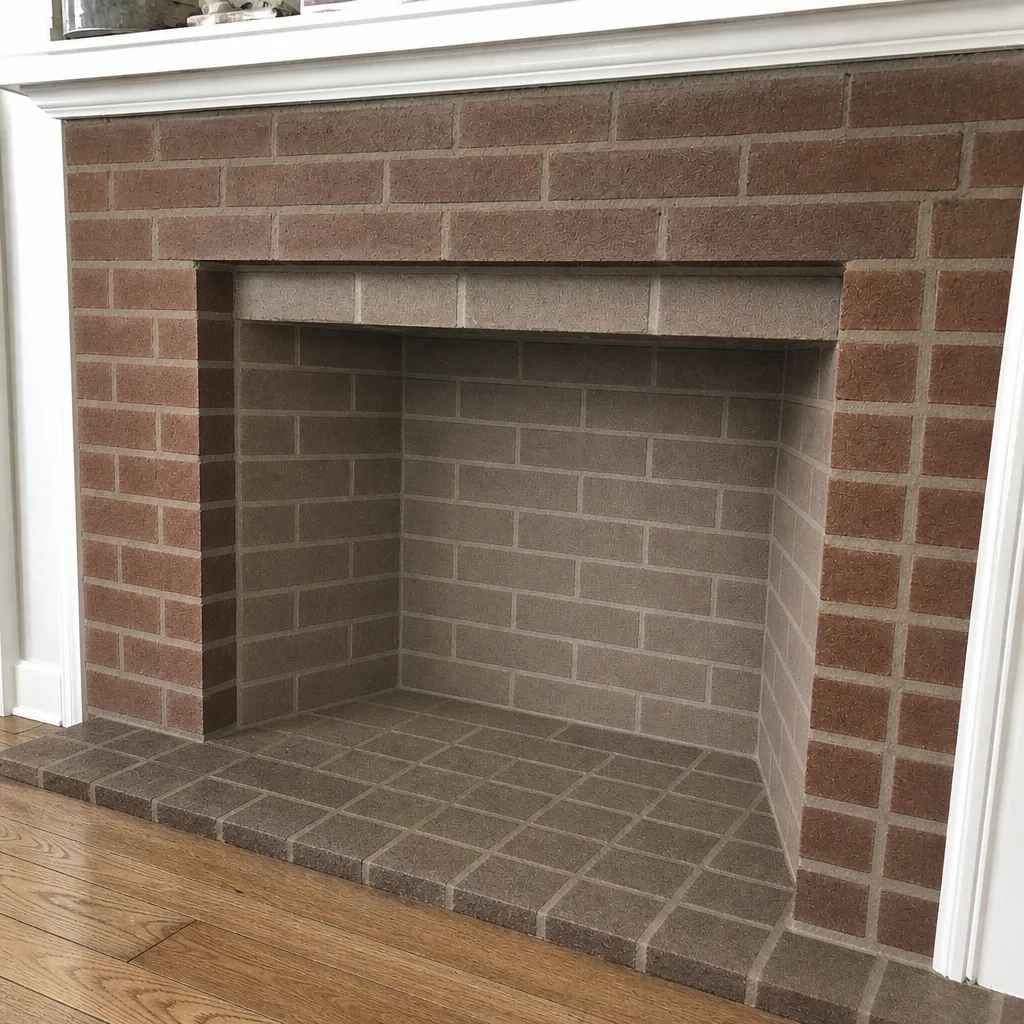
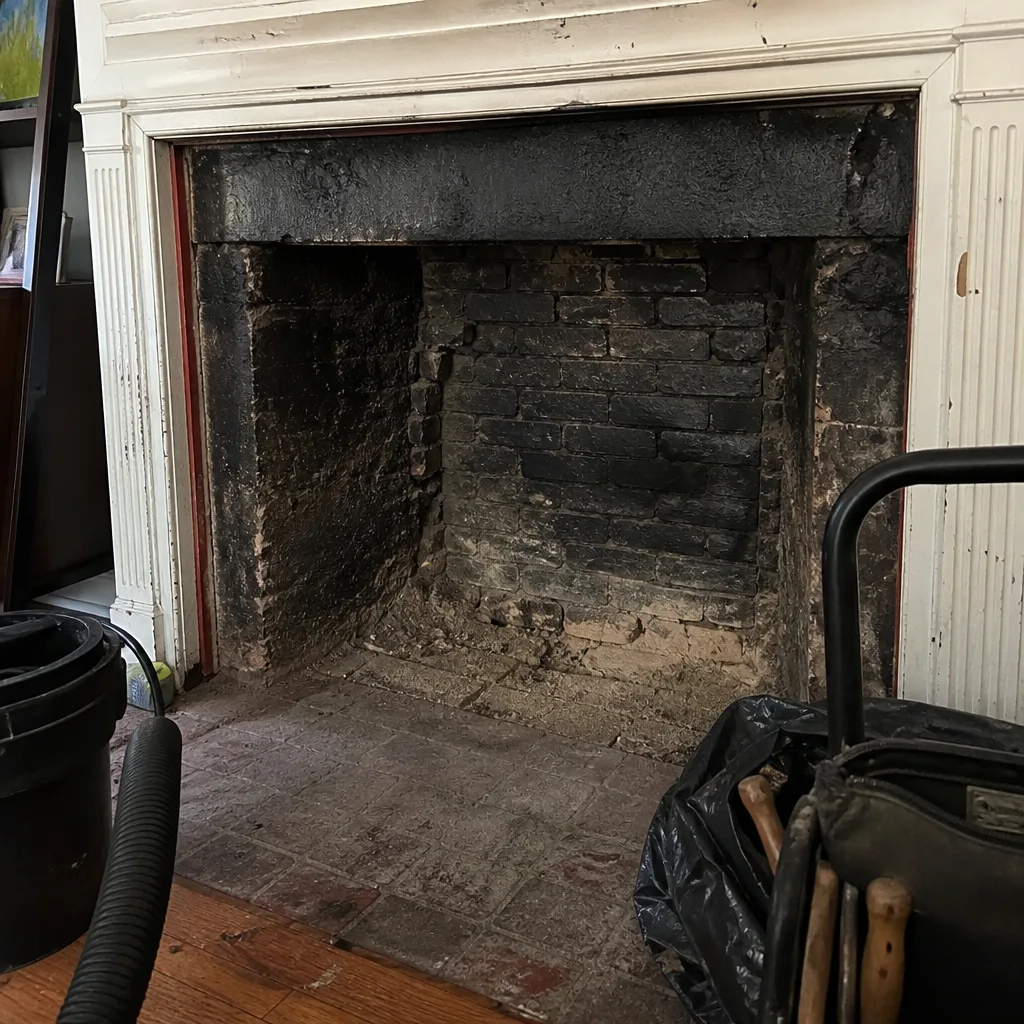
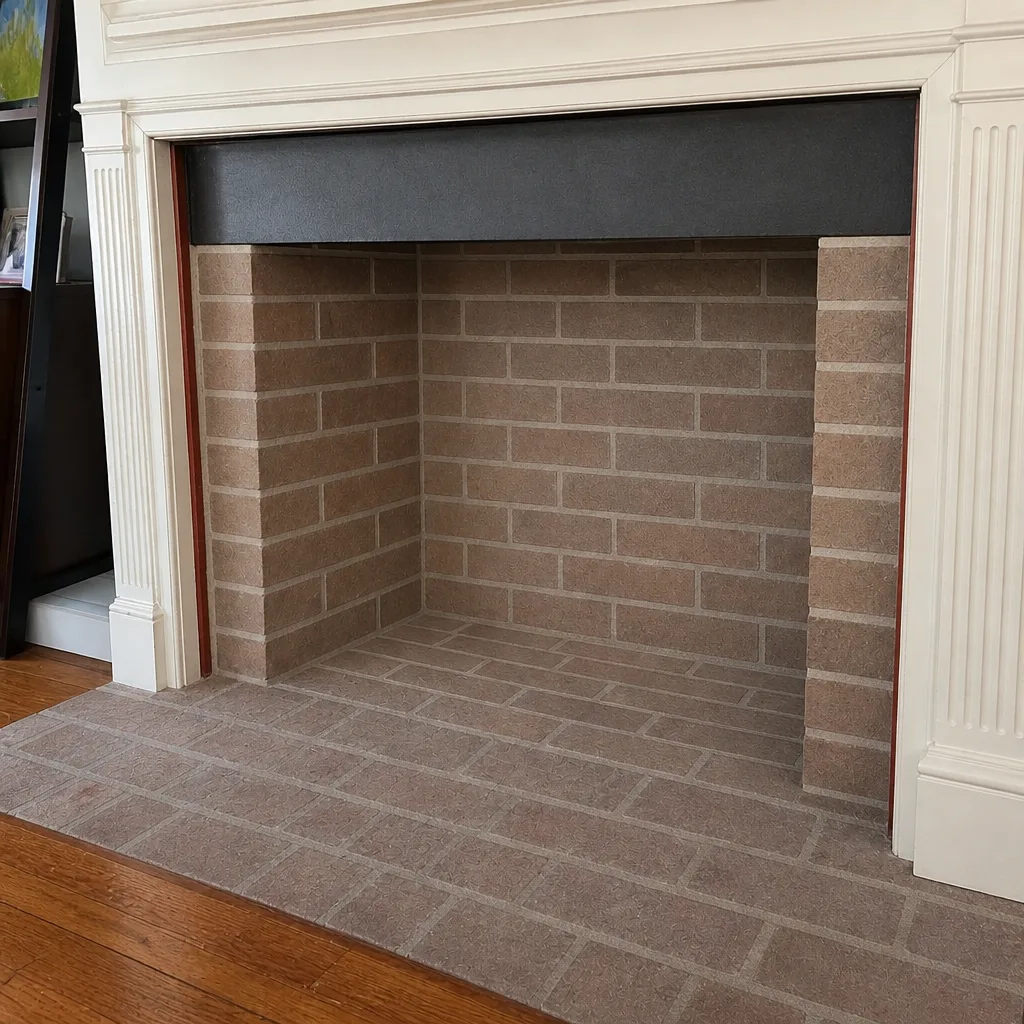
See the difference
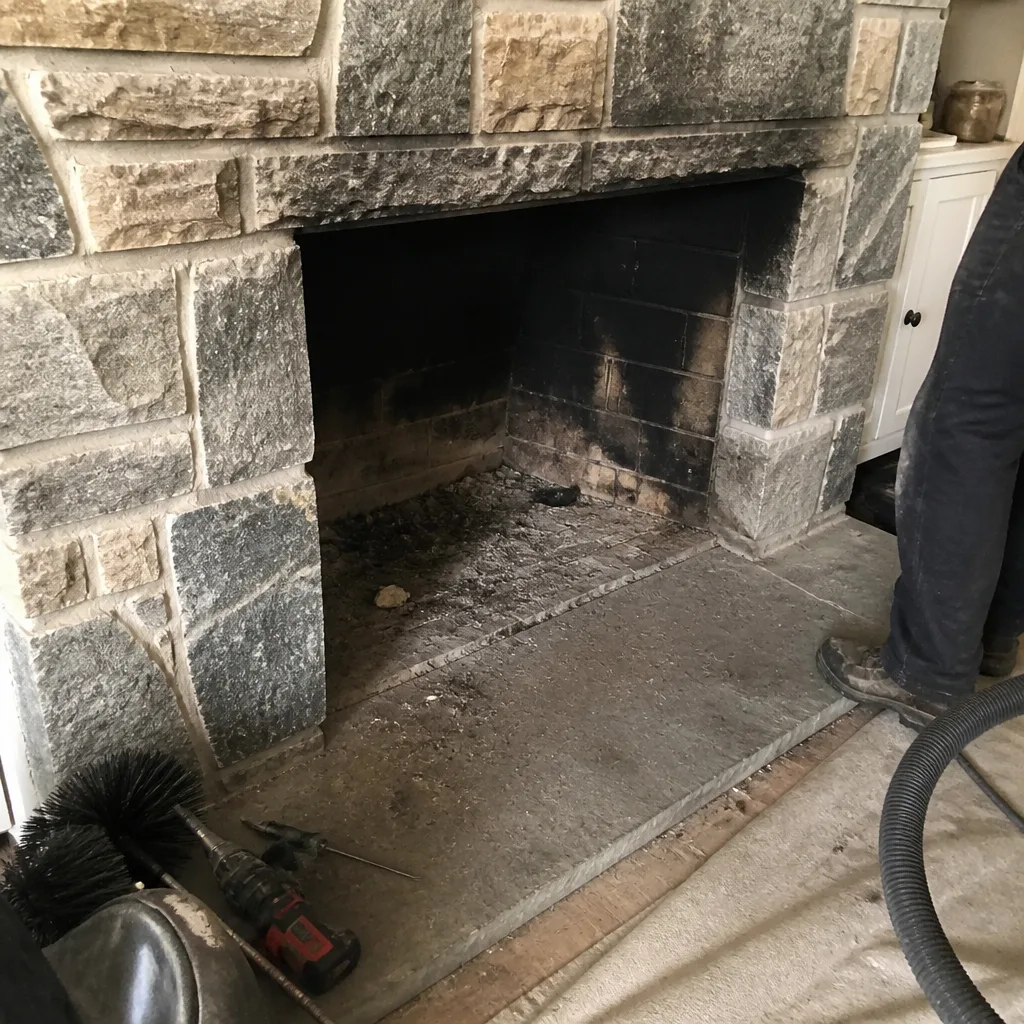 Before
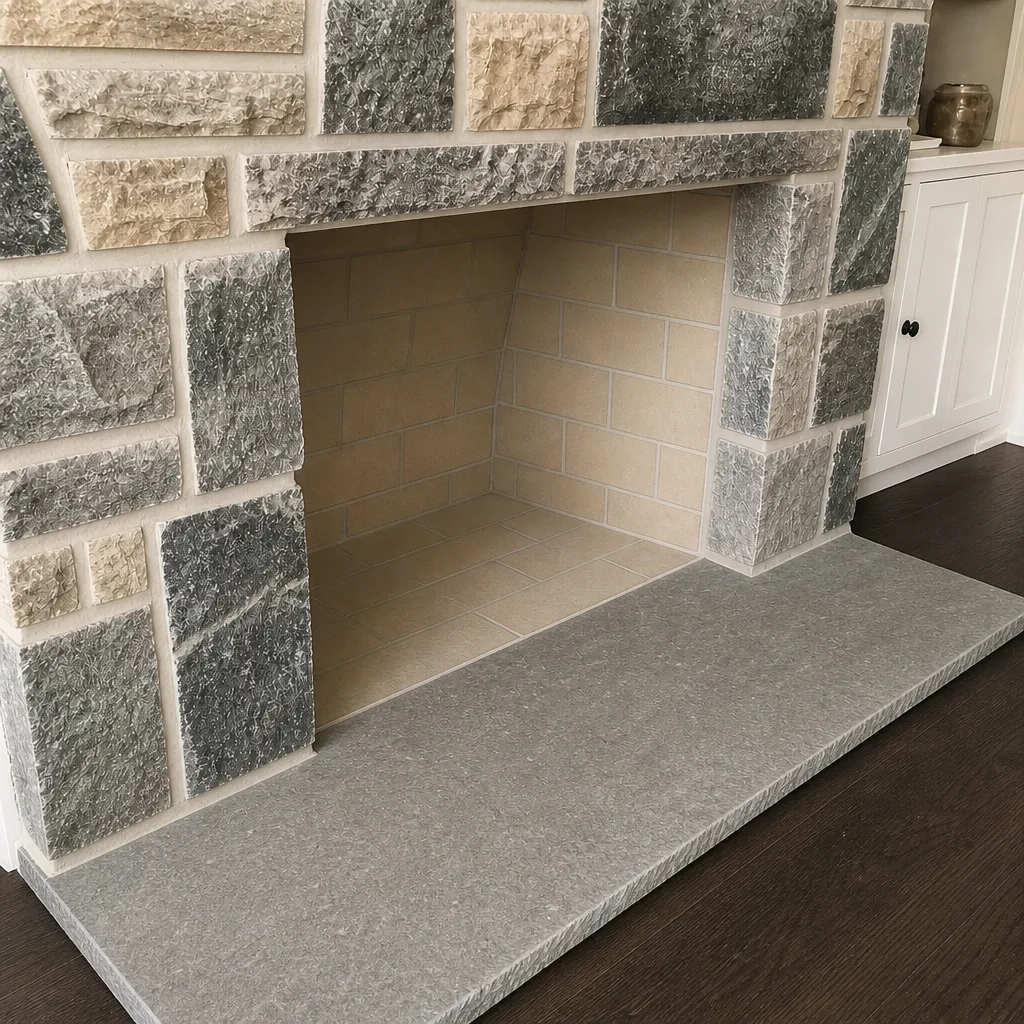 After
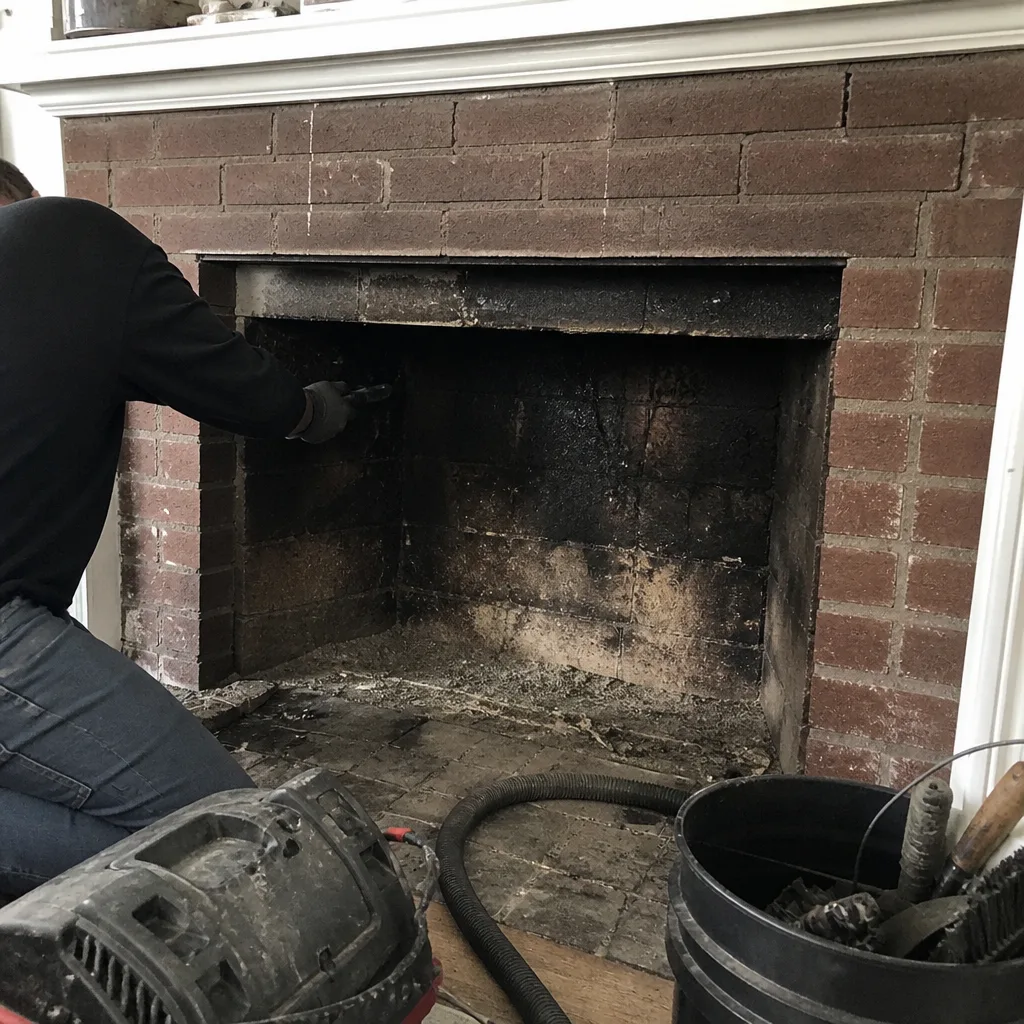 Before
 After
 Before
 After
When to Call a Professional
Call a professional before using the fireplace if you see visible gaps in the firebox mortar, loose firebricks, a cracked flue liner per the last inspection, or a missing cap going into nesting season. Call promptly if you’re seeing through a mortar joint, if the crown is missing sections, or if the cap has visibly shifted. Call for the annual sweep before heating season even if you don’t see anything wrong; the camera inspection is the only way to know what’s happening inside the flue. Any red-line condition from the list above is a call-now, not a monitor item. Everything else is safe to note in your log and discuss at the next scheduled visit. If you’re in Bustleton, we offer free estimates for chimney sweep, cap and crown, liner, repair and fireplace work across the full system, so you don’t need two contractors. Call (833) 350-7109 to schedule.
Frequently Asked Questions
Once a year for most homeowners who burn regularly through the heating season, and more often if you’re burning frequently with green or unseasoned wood. The annual sweep is the visit that establishes a baseline for the year; if that visit finds heavy creosote, the next visit moves up. Call (833) 350-7109 to book the annual sweep and inspection before the heating season starts.
A sweep cleans the flue; an inspection evaluates its condition, including a camera look at the liner, and reports what was found. You want both at the annual visit, and you want the findings in writing. A clean flue with a cracked liner is still a hazard, and only the inspection catches it. Call us if your last visit was sweep-only with no report.
Yes. Pair of binoculars from the yard, same spot each month, five minutes. You’re looking for change: new cracks, spalling, a shifted cap, a missing section. What you can’t see from the ground is the inside of the flue and the top of the smoke shelf down far enough to assess; that’s what the professional visit is for. For anything you spot in the binoculars, call us for an assessment.
That’s usually draft reversal. A cold flue pulls air down into the house instead of exhausting smoke upward, and the smell gets stronger in cold, still or windy weather. It’s worth flagging at the annual visit because the cause (flue too cold to establish draft, a blocked flue, an oversized flue) determines the fix. Call us to schedule an inspection if the smell is persistent.
It depends on the crack. Hairline spider cracks that haven’t grown in two years are typically a monitor item and don’t affect fireplace use. Wide cracks, spalling, or a large portion of the crown affected are a repair-before-the-next-winter condition because they let water into the masonry. If you’re not sure which it is, send us a photo and call for an assessment; the answer takes a couple of minutes.
At minimum: date, creosote stage observed, liner material and condition, crown and cap condition, and any deferred repairs with the reason they were deferred. Add the camera inspection photo or video if you get one. Hand that to the next visit’s technician and they can track change year over year, which is what a condition log is for. Call us if you want a starting template.
The Bottom Line
The Bustleton chimney that lasts is the one whose owner watched it, not just brushed it. Monthly binocular checks from the yard catch crown and cap failures before they become water damage. Seasonal checks tied to the freeze-thaw cycles in February and March catch mortar degradation around the time it happens. The annual professional visit gives you the inside-the-flue picture, and the log you build from that visit is what turns a series of snapshots into a trend. Any red-line condition on the list above is a call-now; everything else goes in the log for the next visit. That’s the whole system, and it’s the same one we use on every Chimney Sweep Bustleton visit.
If you’d like us to put eyes on the crown, cap, firebox and flue, we cover the full system in Bustleton: sweep, cap and crown, repair, liner, rebuild, and fireplace work, with DuraFlex liners and HeatShield resurfacing where the liner condition calls for it. Our technicians have up to 9 years of experience, and no repair gets recommended without camera evidence you can see yourself. Call (833) 350-7109 for a free estimate. We answer 24/7. Fast dispatch from 7am to 7pm, Sunday through Friday. A call outside dispatch hours is booked into the next opening, Sunday through Friday, 7am to 7pm.
Written by the team at Chimney Sweep Bustleton.